
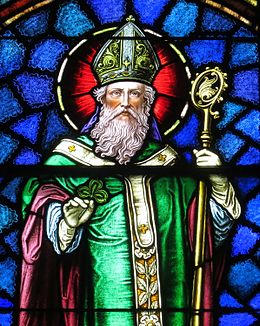
 By Steve Beard
While sifting through obscure Spanish colonial records, it was discovered a few years ago that the very first St. Patrick’s Day parade was not conducted in Boston, Chicago, nor New York City.
Instead, the Irish feast day was celebrated in modern day St. Augustine, Florida, in 1601.
“They processed through the streets of St. Augustine, and the cannon fired from the fort,” said Prof. J. Michael Francis of the University of South Florida at St. Petersburg, who discovered the document. The ancient records named “San Patricio” as “the protector” of the area’s maize fields. “So here you have this Irish saint who becomes the patron protector of a New World crop, corn, in a Spanish garrison settlement,” he said.
This strange twist in the story and celebration of St. Patrick, a fifth century holy man, is really not that surprising. Historians are constantly attempting to set the record straight. After all, Patrick was not Irish (born in Britain of a Romanized family). He was never canonized as a saint by the Catholic Church. Interestingly, there are two St. Patrick’s Cathedrals in Armagh, Ireland – one Catholic and one Protestant. Remarkably, Saint Patrick’s Cathedral in Dublin is both Catholic and Protestant.
The legacy of Ireland’s patron saint blurs a lot of lines – but, he is notably worth celebrating. Continue reading