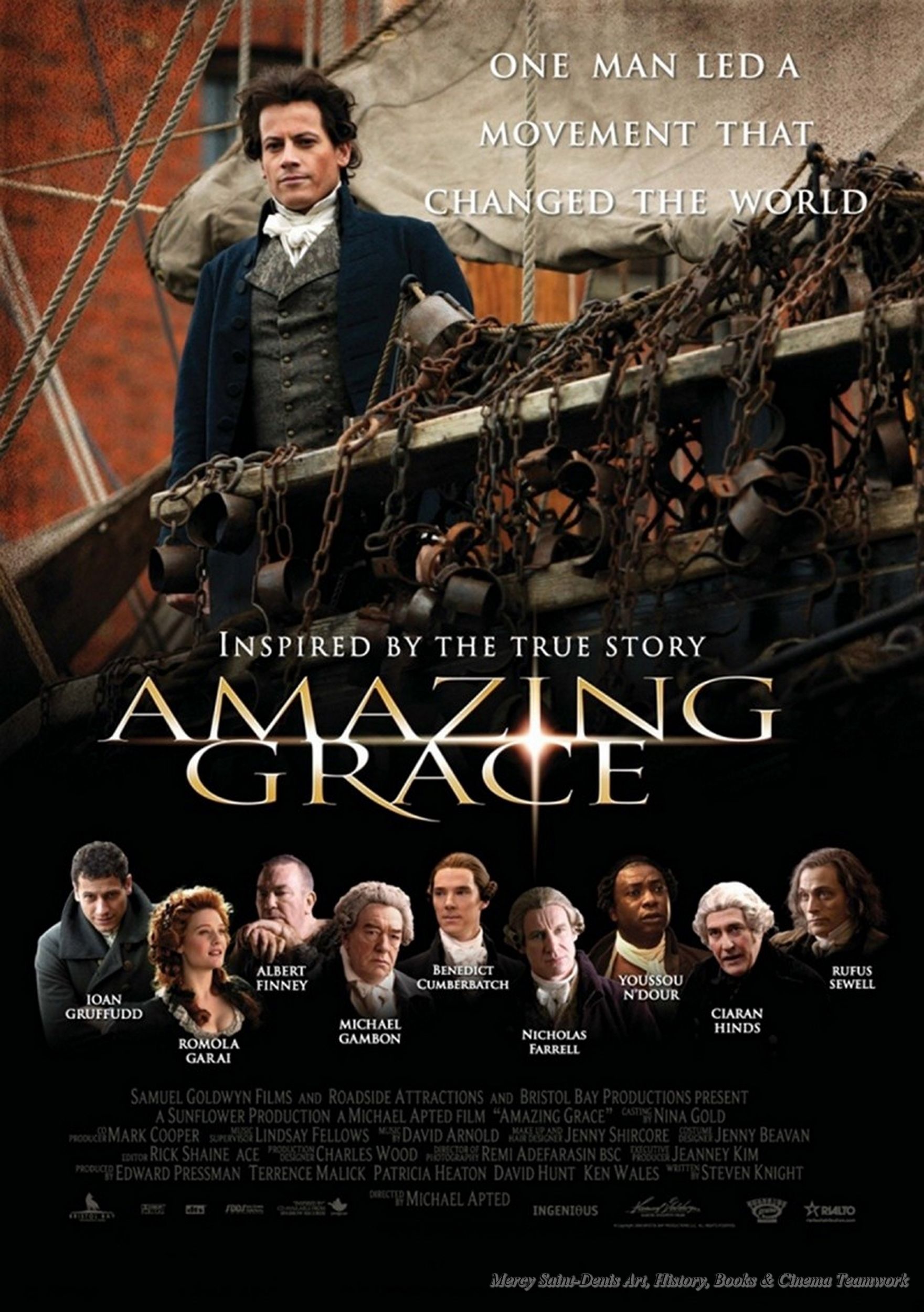
Amazing Grace

You may remember the scene in the movie Crash (2004) where Anthony, a car thief played by rapper Ludacris, discovers a van with the keys dangling in the driver’s door. Since no one is around, he hops in and drives to a chop shop to sell off the parts. When they open up the back of the van, Anthony and the white shop owner are startled to find a dozen Asian men, women, and children. In stunning immediacy, the shop owner offers Anthony $500 for each one without a tinge of reluctance—haggling for humans like used auto parts.

As the 2006 Academy Award-winning morality tale, Crash is loaded with gut-wrenching scenes meant to prick our racial prejudices and stereotypes. The chop shop scene came to mind when I saw Amazing Grace, a recent film about British abolitionist William Wilberforce (1759-1833). The movie’s release was timed to celebrate the 200th anniversary of the abolition of slavery in England. At that time, the British Empire was heavily reliant upon the slave trade and Wilberforce dedicated his entire life to fighting the injustice.

Played by Ioan Gruffudd (superhero Mr. Fantastic in Fantastic Four), Wilberforce was elected to parliament at 23 years old. After experiencing a dramatic spiritual conversion a few years later, he struggled with his “secular” political vocation. He was ready to call it quits until John Newton, a former slave ship captain and author of the hymn “Amazing Grace,” convinced him that combating slavery would be doing the work of heaven. “The principles of Christianity,” says Newton (Albert Finney), “require action as well as meditation.”

Despite suffering from various illnesses, Wilberforce spent his life trying to ensure that others might be free. He even stopped taking the prescribed opium for his pain because it diminshed his mental alertness and rhetorical agility.

The British slave trade was shut down in 1807 because of Wilberforce’s tireless efforts, yet he continued to work until the end of his life to completely abolish slavery in England. In 1833, a bill to outlaw slavery was finally passed. Wilberforce died three days later.

But even today the global battle against slavery is far from over. “Although most nations have eliminated servitude as a state-sanctioned practice, a modern form of human slavery has emerged,” states the 2006 U.S. State Department “Trafficking in Persons Report.” “It is a growing global threat to the lives and freedom of millions of men, women, and children. Today, only in the most brutal and repressive regimes, such as Burma and North Korea, is slavery still state sponsored. Instead, human trafficking often involves organized crime groups who make huge sums of money at the expense of trafficking victims and our societies.”

The report profiles horrific examples: “Reena was brought to India from Nepal by her maternal aunt, who forced the 12-year-old girl into a New Delhi brothel shortly after arrival. The brothel owner made her have sex with many clients each day. Reena could not leave because she did not speak Hindi and had no one to whom she could turn. She frequently saw police officers collect money from the brothel owners for every new girl brought in.… Reena escaped after two years and now devotes her life to helping other trafficking victims escape.”

As sad as her story is, Reena is one of the lucky ones. In researching his book Not For Sale, professor David Batstone traveled to Cambodia, Thailand, Peru, India, Uganda, South Africa, and Eastern Europe to investigate modern-day slavery. His findings are breathtaking. “Twenty-seven million slaves exist in our world today,” he writes. “Girls and boys, women and men of all ages are forced to toil in the rug looms of Nepal, sell their bodies in the brothels of Rome, break rocks in the quarries of Pakistan, and fight wars in the jungles of Africa. Go behind the façade in any major town or city in the world today and you are likely to find a thriving commerce in human beings.”

The United Nations estimates that there are 10 million children being exploited for domestic labor. Hundreds of thousands of children are forced into domestic slavery in countries such as Indonesia (700,000), Brazil (559,000), Pakistan (264,000), Haiti (250,000), and Kenya (200,000). “These youngsters are usually ‘invisible’ to their communities, toiling for long hours with little or no pay and regularly deprived of the chance to play or go to school,” states a U.N. report. UNICEF estimates that 1 million children are forced today to sell their bodies to sexual slavery.

“The good news about injustice is that there is a God who hates it and wants to stop it,” says Gary Haugen, president of International Justice Mission. His organization of lawyers, criminal investigators, and social workers has been on the frontline to investigate human trafficking, collect evidence, and work with local authorities to rescue the victims and put the bad guys behind bars.

Abolitionists like Haugen are true superheroes. Despite the agonizing stories of slavery told in Batstone’s book, it really is a profile of the men and women who are using their unique skills and perseverance to fight injustice. “The women who embrace the child soldiers of Uganda move in a different universe from those abolitionists in Los Angeles who confront forced labor in garment factories,” he writes. “A Swiss-born entrepreneur launches business enterprises for ex-sex slaves in Cambodia, while an American-born lawyer uses the public justice system to free entire villages in South Asia.”

At the conclusion of Crash, Anthony finds a moment of redemption by freeing the Asian slaves from the back of the van. That cinematic scenario is what abolitionists hope and pray takes place wherever the darkness of slavery overwhelms the light of freedom.

Freedom matters—and now is the time for us to speak up for those who don’t have it.

Steve Beard is the creator and editor of Thunderstruck Media. 

Posted in Uncategorized | Leave a comment

Soul man: The sweet sound of Al Green

By Steve Beard

AL_GREENWhen British musician Elvis Costello was asked if he had ever had a religious experience, he responded, “No, but I have heard Al Green.” Not a bad compliment coming from Costello, a musical legend in his own right.

This year’s Grammy audience was reminded of Green’s magical voice during his collaboration with Justin Timberlake on his mega-hit “Let’s Stay Together.” His captivating performance was a last minute addition when another act had to be pulled from the schedule. As a matter of fact, Green was in the shower when he got the call. “We had two hours and 40 minutes to rehearse, change clothes, go out and do it,” Green testifies. “I thrive on that kind of energy.”

Al Green rose to international fame with timeless hits such as “Let’s Stay Together,” “Call Me,” “Take Me to the River,” “I’m Still in Love with You,” “Tired of Being Alone,” and “Love and Happiness.” In the early 1970s, he sold more than 20 million albums. He was the Prince of Love, the man with the trademark smile that made women swoon in near-riotous concerts as he tossed long stem red roses to adoring fans. A few years ago, Rolling Stone declared that Green is “the greatest popular singer of all time,” describing his songs as “unsurpassed in their subtlety, grace, intimacy, and invention.”

His silky smooth voice was coupled with stage charisma, sex appeal, and undeniable charm. He was the consummate ladies’ man. His voice was a liquid calling card, wooing the listener into a sensuous and lush boudoir of his own creation.

In the summer of 1973, he had an experience that would forever change his life. He had flown from San Francisco to Anaheim, California, for his next show. Shortly after four in the morning, he was awakened by the sounds of shouting. “I sat bolt upright in bed, frightened that some crazy fan had broken into the room,” he writes in his autobiography, Take Me To The River. Green then realized that the commotion he was hearing was coming from his own mouth. “And while the words I shouted were of no earthly tongue, I immediately recognized what they meant. I was praising God…and lifting my voice to heaven with the language of angels to proclaim his majesty on high.”

He laughed. He cried. He knocked on doors of the hotel, telling complete strangers what had happened to him. One woman slammed the door in his face. Someone eventually called security.

Saint Paul was converted on the Road to Damascus; Al Green was made righteous off Interstate 5 near Disneyland.

Green had been singing about love and happiness, but there was a war going on inside—a battle for the substance of his soul. He eventually abandoned his mainstream singing career and began pastoring Full Gospel Tabernacle in Memphis, Tennessee.

For eight years, he sang only gospel until he sensed God give him the green light to sing his old songs. Today, the soul man still puts on the pizzazz in mainstream venues. Resplendent in his white suit and Ray Ban sunglasses, and loaded with long stem roses like a florist, he still has the magic to commandeer the human heart, making it pulse in romance or worship—our very own funky St. Valentine.

“Now I am comfortable mixing everything up, and my audience has responded favorably,” he told the Los Angeles Times several years ago. “When I finished a short prayer at this gig…, people stood up and cheered. That told me that I could give audiences a little bit of the Reverend and they’d likely rejoice.” He sings “Amazing Grace” in casino showrooms in Las Vegas and Lake Tahoe, knowing that many of his admirers hunger for redemption just as he once had.

Full Gospel Tabernacle’s unassuming geodesic sanctuary is tucked in on the side of a quiet residential road, a few miles south of Graceland, off Elvis Presley Boulevard. It has played host to a myriad of music fans who make it a part of their Memphis pilgrimage. They stick out like sore thumbs, showing up promptly at 11 a.m. for a service that will not start for another half-hour. One Sunday while I was visiting, they appeared from Ireland, Arkansas, Nebraska, Minnesota, North Carolina, and England.

The visitors are greeted warmly. After all these years, the congregation has become very familiar with the novelty factor involved with having a musical icon behind the pulpit. Nevertheless, they are here to get down with God, not impress the guests (for example, there are none of Green’s Greatest Hits collections sold in the church lobby). The choir marches in and the B-3 Hammond organ starts to crank up the funk, while the electric guitar starts to wail.

Reverend Al walks around the sanctuary fiddling with his lapel microphone, gently patting visitors on the shoulder as he glides to the back of the sanctuary to adjust his own sound at the mixing board.

Back at the pulpit, Reverend Al is feeling the “unction of the Holy Ghost,” as he calls it. He starts to bob and weave like a boxer as he delivers his sermon on faith. “Hold on, God is coming!” he shouts. “Help is on the way,” he purrs. When he calls for the assembly to give a wave offering by lifting our arms, you can see the nervousness rise in the visitors. Awkwardly, we wave our arms in the air. Who is going to refuse Reverend Al? “Thank you, Jesus! Thank you, Jesus! Stop looking at Al Green,” he says. “Al Green himself came to worship God. He’s been soooo good to me,” he starts to sing as the musicians crank up the volume.

When he starts singing “One Day at a Time, Sweet Jesus,” you know you have been to church. “You are not here by accident,” he says. “I am the same person you heard sing all those songs, but I am not the same person,” he testifies. “I couldn’t preach for 25 years if something didn’t happen to me.” Speaking to the visitors with a winsome grin, he says, “Come and see Al, but Al doesn’t hold the key to your salvation. I can sing ‘Love and Happiness’ four times and I still will not hold your salvation.”

The Reverend closes out the 11 o’clock service at 1:25 p.m. with a soul-felt version of “Gonna Sit Down on the Banks of the River” by blues legend Reverend Gary Davis. He leaves us at the banks, and the decision is ours. Shall we jump in or walk away? You can tell what Green has done. You can see it in his eyes, in his smile, in the intonations of his honey-like voice.

Otis Redding died in a plane crash at 26, Sam Cooke was shot at 33, Jackie Wilson’s career was over at 41, and Marvin Gaye was killed by his father at 44. Al Green is alive—and he is grateful. Somebody shout, Amen!

It is one thing to sing about love and happiness; it is an entirely different enterprise to experience it. As he grabs hold of the pulpit, festooned in his preaching robe, you can see it on his face. He arrived at the river’s edge and took a dive into faith. He looks up at us with a grin and seems to say, “Hop in. The water’s fine.”

Steve Beard is the creator and editor of Thunderstruck.org.

Posted in Uncategorized | Tagged , , , | Leave a comment

Bamf! The gospel according to Nightcrawler

By Steve Beard

When moviegoers were first introduced to Kurt Wagner in the 2003 blockbuster film X2: X-Men United, he was darting through a legion of hapless Secret Service officers at the White House. At first glance, he appeared as a fierce blue demon-looking character that was able to disappear into thin air and reappear across the room.

nightFor comic book fans, Wagner’s appearance in X2 (played by Alan Cumming) was welcomed with delight. His character is better known as Nightcrawler (or Fuzzy Elf to his friends). As a “teleporter,” the German-accented mutant is able to morph into a puff of blue smoke and transport himself with the speed of sound. With acrobatic grace, he cuts quite an image with his dark blue skin, tail, pointy ears, three-fingered-hands, and funny teeth.

Nightcrawler has been one of Marvel Comics’ most unique and complex superheroes since 1975. The X-Men series revolves around a cast of characters that have some form of genetic mutation that manifests itself through extraordinary abilities. They have names such as Wolverine, Cyclops, Magneto, and Rogue. The mutants can control the weather (Storm), blow freezing cold wind (Iceman), or walk through walls (Kitty Pryde, a.k.a Shadowcat). As you would expect, they are treated as freaks and ostracized from society. The storyline revolves around the struggle between the humans and mutants and the need to fight prejudice, suspicion, and bigotry when dealing with people who may have different looks or talents.

Perhaps the most interesting characteristic about Nightcrawler is that he is a mutant of faith—a devout Christian. Out of all the myriad of cartoon superheroes created in the last fifty years, very few have articulated or been indentified with a specific religious faith.

There have, however, been exceptions to the rule. In 2002, it was revealed in the comics that Ben Grimm (a.k.a The Thing) of The Fantastic Four was Jewish. In the movie Daredevil, crucifixes and other religious iconography flood the screen (as well as visits to the confessional) in order to convey Matt Murdock’s struggle between vigilantism and his boyhood Catholic faith. In the Spider-Man movie, the Lord’s Prayer is featured prominently when Aunt May is attacked by the Green Goblin.

To their credit, the screenwriters, director, and producers of X2 allowed Nightcrawler to retain his purity of faith and hope. They skipped the subtle, read-between-the-lines type of allusions to his Christianity and let him express full-metal devotion. Nightcrawler takes refuge in an abandoned cathedral in Boston, festooned with statues of Jesus. When he is nervous, he holds a crucifix and prays the rosary in German. When he needs to summon inner strength, he prays the Lord’s Prayer. When the group is confronted with tragedy, he pastorally quotes Psalm 23.

Quite simply, Nightcrawler is the most intriguing, devout, and unique Christian character that has ever been portrayed on the big screen. He talks righteously about sin and the power of faith, without the slightest hint of holier-than-thouism. Although he has every right to be angry at humans for their bigotry, he chooses to help them. He has fears, but he acts with courage through the power of prayer. He quotes the Scripture to find strength that his genetically mutated special powers cannot give him.

In the movie version, Nightcrawler’s faith is further highlighted in that his body is covered in tattoos, one for each of his sins. He calls them his “angel marks.” In a form of penance, they are self-inflicted ancient Enochian symbols considered to be an angelic alphabet.

Good-natured swashbuckler

When Nightcrawler first began with the X-Men, he was not conceived as a religious superhero. He was a swashbuckling adventurer with a good sense of humor and a special charisma with the ladies. He even became the leader of the British superhero group Excalibur.

His unique look always made him appear to be something that he was not—namely a demon. The creators used his image to further press their point that prejudice and bigotry brutally cloud our judgment in being able to truly judge a person. This was only heightened when Nightcrawler began quoting Scripture, praying, and hanging out in abandoned cathedrals. He began to be mentored by a priest at Church of Michael the Archangel in Brooklyn and studying for the priesthood.

For a period of time in the X-Men comics, Nightcrawler has been shown wearing a clerical collar and even presides over the funeral of a friend. In the midst of his theological studies, he also struggles with his faith, the tremendous injustice that he sees all around him, and what it would mean to become a priest.

Staring at a life-size crucifix in St. Patrick’s Cathedral, he says, “Your death was intended to show us a shining example of how we should live in loving union with you and those around us. Yet even those of us who hold you deepest in our hearts — fail — in keeping true to your divine word.”

In continuing his confession, he says: “Clergy, parishioners, priests — me. I have such thoughts—feelings I cannot escape—the desires for the touch of a woman.” While the temptations of the flesh weigh heavy on his conscience, Nightcrawler’s vastly more threatening challenge is against the racist and religious humans of the Church of Humanity, a Ku-Klux-Klan type of anti-mutant organization.

With the gritty and heart-torn anxiety of the Psalmist, his poignant monologue continues by unleashing his frustration on a seemingly standoffish God. “And now another Holy War is brewing — more fools take up weapons of murder in Your name. And You allow it. Perhaps even encourage it. If we take You into our hearts, does that mean fighting and killing in Your name — or not fighting and being killed in your name? Which is the right answer? And what purpose does it serve to torment your most faithful when the goal is maybe one day sitting beside you — alone — possibly forever apart from the ones we love and desire — who chose wrongly or failed your uncertain tests?”

The scene concludes with Nightcrawler looking at his crucified Jesus and saying, “When next we meet, I expect answers.”

 Did God give up on the mutants?

wolverineWith the heightened popularity of the X-Men movies, a DVD collection of animated TV episodes from the early 1990s was been released entitled X-Men: The Legend of Wolverine (Buena Vista). It includes an entire episode devoted to the origin and theological disposition of Nightcrawler.

The story takes place within a monastery in a small Bavarian village in Germany. Three of the X-Men (Wolverine, Gambit, and Rogue) find themselves being aided by monks in the aftermath of an avalanche. Having been mistaken for a demon by the townspeople because of his looks, Nightcrawler explains to Wolverine and his friends that his genetic mutations were evident from birth and that the villagers chased he and his mother of out of town.

His mom (Mystique) also abandoned him as a child (in the comics, she throws him over a waterfall) and a family of travelling performers took him in. When he was young he was able to work in the circus, but he was still treated as an outcast, “shunned and hated.” In talking with Wolverine, Nightcrawler says, “Though all people are flawed and struggle with the capacity for sin, none likes to be reminded of our shared human weakness. My appearance does not make it easy.”

“Don’t it make you crazy?” Wolverine asks with incredulity.

“It did once, but then I found peace by devoting my life to God,” said Nightcrawler. “He directed me to this place [the monastery] where they value the character of my heart, not my appearance.”

This only sends Wolverine further into a rage. “What are you talking about? God gave up on us long ago!” Nightcrawler counters, “No, my friend, God does not give up on his children—human or mutant. He is there for us in our times of joy and to help us when we are in pain—if we let Him.”

Later, Nightcrawler tells Wolverine, “We are alike, you and I—angry at the world. My pain drives me to seek God, yours drove you away.” Wolverine is further infuriated when he asks why God would have allowed him to be treated so badly. “Our ability to understand God’s purposes are limited,” says Nightcrawler, “but take comfort in the fact that his love is limitless.”

Amazingly, the episode concludes with Wolverine kneeling in a French cathedral reading the Bible and saying, “I will give thanks to you O Lord. Though you are angry with me, your anger is turned away and you have comforted me. I will trust you. I will not be afraid.”

Not a bad message — especially coming from a superhero.

 Steve Beard is the creator and editor of Thunderstruck.org.


Posted in Uncategorized | Leave a comment

Evel Knievel’s leap of faith

By Steve Beard

April 2007

With a career that began by jumping over a 20-foot box of rattlesnakes and two mountain lions and graduated to an attempt over the Snake River Canyon, Evel Knievel electrified audiences in the 1960s and ’70s with death-defying feats. Now, at age 68, the famous and cantankerous daredevil has been forced to confront a different challenge — namely facing his own mortality.

Original art by Dushan Milic - dushanmilic.com

Original art by Dushan Milic – dushanmilic.com.

Born Robert Craig Knievel, the legendary showman is now ravaged with arthritis and finds relief from his intense back pain through a drug pump inserted in his abdomen that provides him with synthetic heroin and morphine.

Knievel profited handsomely off the controversy fueled by his jaw-dropping motorcycle jumps — long before extreme sports became commonplace in American culture. His rebellious and fearless reputation was enhanced through his bouts with safecracking, bank robbing, prison, bankruptcy, divorce, heavy drinking, high-stakes gambling, battling the IRS, and broken bones (he holds the Guinness Book of World Records number on that count).

Throughout his career and retirement, Knievel was a well-known independent thinker — outspoken in his disdain of organized religion and vigorously rebuffing the appeals of family and friends to make peace with God. He told his first wife, a devout Christian, that he was not interested in heaven unless it was populated with beautiful women and golf courses.

Within the past year, however, his outlook began to change. “I think about God a lot more than ever, though I used to ask him, ‘Help me make a good jump,’” Knievel told USA Today in January 2007. “I’m awfully tough to get along with, but I’ll tell you what: I am a good person. I wish there was such a thing as reincarnation.”

Perpetuating his gruff tough guy image, Knievel went on to say, “If there is a heaven, I don’t know anything else I can do to get there—and neither do you. There are some personal things that I would never do again.…God made us. He’s in charge of everything, right? If he didn’t like us, why didn’t he change us? Hey, I faced every challenge that came along. I just did everything. I have no regrets.”

evelshulerOn Palm Sunday of this year — several months after the USA Today interview — the man who captured the imaginations of audiences around the world with his motorcycle stunts spoke about his dramatic conversion to Christianity and was baptized during a service at the Crystal Cathedral in southern California. “Jesus Christ is everything! I know that now. If I had known that years and years ago, I would have been three times the man I thought I was,” Knievel told the congregation. Three weeks later, his testimony was broadcast on the Hour of Power television show seen in more than 100 nations.

Interviewed by Dr. Robert H. Schuller, the 80-year-old television ministry pioneer, Knievel shared about the emptiness that he was feeling in his life. “The God I was praying to was a God that I thought maybe could answer my prayers, but I didn’t realize that I needed to go through a living God.”

Knievel described himself as a person “who always believed in God, there was a God power, but I always had trouble believing in Jesus Christ, the Son of God. I don’t know why I fought it so hard, I just did. But I think maybe it was the power of prayer. Maybe God just got sick and tired of me fighting it so much. He reached out and grabbed me and said, ‘Look, I just want you…you’ve got to stop this nonsense, you just come with Me.’”

Knievel told the congregation that he began thinking more about God prior to attending Daytona Bike Week in Florida in early March. He had called an old friend whom he had not spoken to for more than thirty years. The man was a pastor and he told Knievel that he would have his church pray for him. “My daughter had her whole church praying for me in Bozeman, Montana; and my ex-wife Linda, she’s had her whole church praying for me in Butte, Montana,” he said. “And she’s prayed for me for 25 or 30 years that I would become a Christian.”

In his frail state and with labored breath, Knievel said, “I don’t know if it was the power of the prayer, or of God Himself. But it just reached out either while I was driving, or walking down the sidewalk, or sleeping; and the power of God in Jesus just grabbed me. It just took a hold of me so strong; I can’t tell you how strong it was…All of a sudden I just believed in Jesus Christ!”

According to Knievel, his dramatic conversion took place during the Daytona Bike Week—a rowdy biker convergence known more for free-flowing alcohol and scantily clad women than for religious contemplation. On the second night of the event, he rose up from his bed in the middle of the night and shouted, “Devil, devil you bastard you, get away from me. I cast you out of my life.” He then went to the balcony of his hotel room and told the devil, “I will take you and throw you, throw you on the beach. You will be dead, you will be gone. I don’t want you around me anymore.”

He told the congregation, “I did everything I could. I just got on my knees and prayed that God would put His arms around me and never, ever, ever let me go. When I said [to the devil], ‘Get away from me,’ all of a sudden I was just overcome by the Spirit of God Almighty.”

After his unforgettable experience, he bought a Bible, the Jesus of Nazareth film, and Lee Strobel’s book, The Case for Christ.

As he shared his testimony, he encouraged the audience to not make the same mistake regarding Jesus Christ that he had made. “Do not let us come with any patronizing thoughts in our minds to say, ‘Oh yes, Jesus was a minister of his time, or a biblical person, a person who believed in God, who taught us, he was a teacher, a great human being.’ Jesus did not offer us that,” Knievel said. “He is the Son of God and if you don’t believe that Jesus Christ is what he says he is, you will surely die, you’ll die in your sins, believe me.”


Conversion superstars

I don’t imagine that there will be politicians, movie stars, lawyers, baseball players, musicians, generals, theologians, or daredevils in heaven. There will only be believers. It seems that selflessness and humility — and a singular focus on God — will be the prevailing ethos of eternity. If there are superstars in heaven, I don’t imagine that most of us will have ever heard of them. I have a sneaking suspicion that there is a different set of requirements to be well-known on the streets of heaven than here on earth.

All of this is to say that celebrity conversion is no more impressive to the great cloud of witnesses than the changed life of one who is only known by a small community. As Jesus said, “There is more rejoicing in heaven over one sinner who repents than over ninety-nine righteous persons who do not need to repent” (Luke 15:7). Having said that, we are often captured by the interesting and eccentric testimonies of superstar prodigals who find redemption. (I admit to being a bit biased since I treasured my Evel Knievel action figure and stunt cycle during my childhood.)

As I watched the Hour of Power telecast, one could sense that Evel was genuinely transformed by his midnight visitation from God in his Daytona hotel room. What was equally impressive was the response of the congregation after his baptism. When the invitation was made for others to participate, hundreds of people streamed into the aisles. Many wept as they were baptized. This kind of response — now, more than 1,000 — was repeated for several weeks after Knievel’s testimony.

Evel Knievel’s swagger and bravado created an image that helped to provide him with popularity and wealth, but his contrition and God’s grace are what he believes will grant him eternal life. Even the daredevil knows he can’t cheat death forever.

“I know that there’s more to life than what I’ve had. I wrote a book called, Evel Ways. I said I’ve had a life better than any king, any president or any prince. Hogwash! I didn’t have Jesus Christ in my life. I was talking about the Rolls Royce I had, five of them; the Ferraris I’ve had, five of them; the Stetsons, and the Lamborghinis, and the jet airplanes, two of them.…the diamonds, and the gold, and the racehorses, and the women, and the booze.

“I want to tell you something, I’ve been a sinner. You’re looking at a real sinner, but not anymore.”

 Steve Beard is the creator and editor of Thunderstruck Media.

Posted in Uncategorized | 2 Comments

Working through the frustration

My apologizes. This is the second time we’ve been hacked within the last several months. We are working on rebuilding this effort. Hold Fast.

Posted in Uncategorized | Leave a comment

You might be Jeff Foxworthy if …

By Steve Beard

July 2012, Good News

You might be Jeff Foxworthy if …

  1. You are the Mark Twain of Redneck Jokes.
  2. You were the long-time host of Are You Smarter Than A 5th Grader?
  3. You helped launch the Blue Collar Comedy Tour.
  4. You are about to host The American Bible Challenge.

How about All of the Above?

The first thing that ran through Foxworthy’s head when offered the hosting gig for the new show was, “The Bible as a game show? Am I gonna get called to The Principal’s Office for that?” Of course, that was followed by his now familiar laughter. Continue reading

Posted in Uncategorized | Tagged , , | Leave a comment

Righteous Laughter: Tim Conway and Victoria Jackson

By Steve Beard

2008, Good News

Tim Conway has been making people laugh for over four decades on stage, television, and film. He’s an American comedic icon known for his improvised humor, razor-sharp timing, and hilarious character portrayals. His 11-year stint on The Carol Burnett Show garnered him five Emmy Awards, a Golden Globe and three generations of fans.

As host of the comedy DVD Thou Shalt Laugh 2: The Deuce, Conway told Good News, “The audience consisted of parents, grandparents, and kids. It reminded me of the old Burnett show. The audience absolutely roared. When you have the freedom of knowing you’re not going to be offended, you can relax.” Continue reading

Posted in Uncategorized | Tagged , , | Leave a comment

Of Craft and Commission: Heston, Crowe, and Washington

By Steve Beard

2007, Breakpoint Worldview

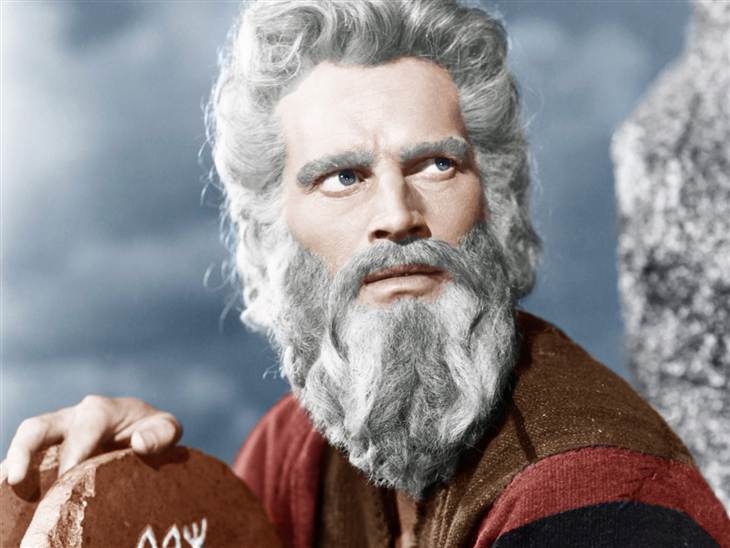
The recent passing of Charlton Heston sparked a pretty intense childhood flashback from the 1970s, when I was able to stay up past my bedtime to watch The Ten Commandments on television. I was mesmerized with Charlton Heston, Yvonne De Carlo, Yul Brynner, Debra Paget, Edward G. Robinson, Anne Baxter, and Vincent Price. The Ten Commandments helped connect the dots in my young spiritual imagination. The story from Sunday school suddenly had a Middle Eastern landscape, a baritone voice, gaudy make-up, and far more dynamism than a flannel-board lesson.
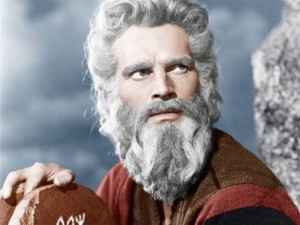
hestonIn working on Heston’s obituary, the Los Angeles Times unearthed an illuminating story it had published in 1956 titled “Moses Film Awes Portrayer: Actor Charlton Heston tells of drama in ‘Ten Commandments.’ ” In preparation for his role, he memorized lengthy passages from the Old Testament and persuaded director Cecil B. DeMille to allow him to portray the Mount Sinai scene barefooted, to add to the credibility of his role. “I stood on the ground where he stood, breathed the air he breathed, and was almost overwhelmed by the thought that here Moses became the only man in recorded history to meet God face to face,” Heston told the Times.

He confessed to the difficulty of portraying the humanity of Moses. “He had God’s thumbprint on his forehead, but because he was a man he must be comprehensible to other men,” Heston observed of his role. “I always work on the theory that the audience will believe you best if you believe yourself. This meant that I had to come to understand Moses well enough to believe in my portrayal of him.”

Over his illustrative career, Heston played many religious characters, including Michelangelo (The Agony and the Ecstacy), John the Baptist (The Greatest Story Ever Told), and Judah Ben-Hur (Ben-Hur). Of his many roles, he once joked, “I have played three presidents, three saints and two geniuses. If that doesn’t create an ego problem, nothing does.” Those who knew him best, however, report that he lived with great humility.

A life-long and faithful churchgoer, Heston immersed himself in the stories of Scripture. There was even a four-part documentary series produced titled Charlton Heston Presents the Bible, shot on location in the Holy Land as he read from the Scripture and discussed historical facts about biblical locations and events.

In his 1956 interview with the Times, Heston offered a profound analysis of the mechanics behind a spiritually transformed life. “It is interesting to note that once Moses climbs Mt. Sinai and talks to God there is never contentment for him again,” Heston observed. “That is the way it is with us. Once we talk to God, once we get his commission to us for our lives we cannot be again content. We are happier. We are busier. But we are not content because then we have a mission—a commission, rather.”

‘MY WORK IS MY MINISTRY’
Heston’s observations regarding contentment, happiness, and commission took on an interesting perspective as they relate to American Gangster co-stars Denzel Washington and Russell Crowe. Leaving analysis of the film to others, I became far more interested in the way the two Academy Award-winning actors view their craft and commission.
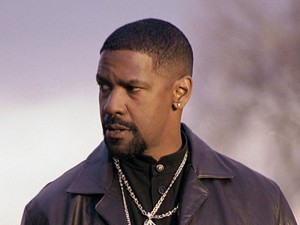
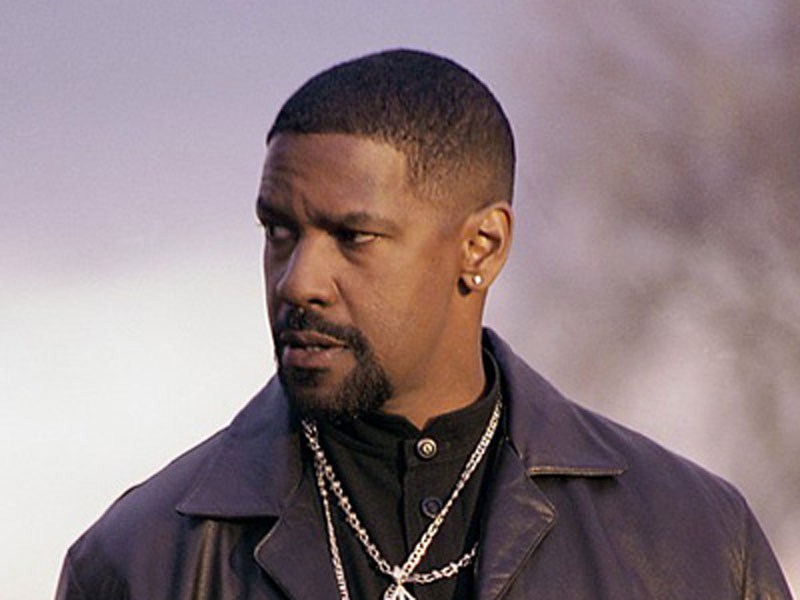
Denzel-WashingtonBoth men are considered to be in the top echelon of their profession, deeply respected as actors, and able to command top-dollar for their performances. Master and Commander, Training Day, A Beautiful Mind, Philadelphia, Gladiator, and Malcolm X are just a handful of Washington’s and Crowe’s noteworthy performances. Both of them literally stepped into the ring and took the body blows to play boxers in The Hurricane and Cinderella Man. Most recently, the two actors have become more outspoken about their spiritual lives.

Washington has been more well-known as a believer because of his long-time membership at the West Angeles Church of God in Christ—a megachurch in South Central Los Angeles. For the recent spectacular audio projectThe Bible Experience,” he and his wife, Pauletta, give voice to the Song of Solomon.

Washington ’s father was a Pentecostal preacher who simultaneously worked for the water company during the day and as a security guard at night. “I think every event in my life has been touched by God,” Washington confessed to Parade several years ago. “I remember sitting in my mother’s beauty parlor in New York on March 27, 1975, and in the mirror I kept seeing this woman looking at me.” He was a 20-year-old student at Fordham University at the time.

“I was doing so bad in school, and this woman said, ‘Somebody give me a piece of stationery! I’m having a prophecy!’ I still have that piece of paper. ‘You’re going to speak to millions of people,’ she said to me. ‘You’re going to do great things!’ And I thought, ‘Yeah, right. When’s that going to start? On Monday? I’m flunking out of school.’ ”

When he later asked his mother about the woman, she told him, “It’s Ruth Green, one of the elder sisters in the church, who’s been known to have the gift of prophecy.” He admits, “I didn’t think too much about it at the time, but that fall I started acting.”

As a young man, Washington found himself exploring Eastern philosophies and reading the Qur’an in his search for personal meaning and inner peace. In 1979, director Robert Townsend took him to West Angeles, and he found the spiritual sanctuary he had been looking for.

Washington was tempted to follow in his father’s footsteps and be a minister and even asked his pastor, Bishop Charles Blake, if he should become a preacher. Blake and Washington agreed that he was right where God wanted him. “So my work is my ministry,” he told BeliefNet. “I’ve always understood why I’ve been blessed to be put in this situation. And I’m more than happy to take advantage of it and to preach, if you will, about what God has done in my life.”

His stature within Hollywood gives him a certain degree of persuasive power regarding some aspects of his projects. For a film such as The Great Debaterswhich he starred in and directed— Washington is outspoken about his use of prayer to help him make decisions. “Every major decision I made, I made through prayer, about who I was picking to be in it, what it was I was trying to say, praying that the film was saying the right thing and that it would reach the right people,” he said. Prayer is the way he begins and ends his day.

Portraying the corrupt policeman Alonzo Harris in Training Day is the role that landed Washington an Oscar, but it was also the film he warned Bishop Blake not to see. “Pastor, I don’t know if you will want to see this film,” Washington said. Nevertheless, there was a message he wanted to send in portraying the role.

“Even in a role like Training Day, the first thing I wrote on the script was, ‘The wages of sin is death,’ ” he told BeliefNet. “And it was important, actually, for me in making that film. They actually wanted the guy to live at the end. And I said no. I think the only way I could justify him living such an awful life, or living in the worst way, was for him to die in the worst way. I’m always looking for that—for some kind of a message.”

Washington sees himself on a spiritual quest and takes his prayer and devotional reading seriously. “I read the Bible every day,” he recently told Reader’s Digest. “I’m in my second pass-through now, in the Book of John. My pastor told me to start with the New Testament, so I did, maybe two years ago. Worked my way through it, then through the Old Testament. Now I’m back in the New Testament. It’s better the second time around.”

In addition to his Christian faith, Washington is also quite serious about defending his profession. When Reader’s Digest asked him, “Do you ever see a conflict in Hollywood, Godless Hollywood, as a spiritual person?” Washington was quick to respond: “Well, wait a minute. Stop. That’s broad. Godless Hollywood? What is that? First of all, Hollywood is a part of Los Angeles, not a way of thinking. When you say Godless Hollywood, are you including me? Are you saying everybody in Hollywood is Godless? That’s like saying Godless Reader’s Digest. No such thing, right?”

Hardly a tepid interviewee, Washington becomes feisty when he feels as though a bumper sticker characterization replaces more nuanced reasoning regarding faith and art. For him, instilling his creative endeavors with his faith is part of his commission. “It’s who I am. It goes with me wherever I go. Understand that it’s something bigger than making a film, even American Gangster,” he told BeliefNet. “When I met Frank Lucas [the drug kingpin the movie is based on], he said, ‘Do this and win an Oscar.’ I’m like, ‘Frank, I’m not in it for that.’ I found it interesting that he paid for his crimes with jail time, and now he’s paying with his body, which has sort of betrayed him. It’s important for me to tell that part of the story. There are consequences.”

‘I’M WILLING TO TAKE THAT LEAP OF FAITH’
Washington’s co-star in American Gangster, Russell Crowe, is not one that would likely end up on an Entertainment Weekly list of the deeply religious in Hollywood. Instead, he has the reputation of being a brilliant—albeit moody and short-tempered—actor who doesn’t suffer fools gladly. Nevertheless, he is a far more complex individual than the subjects of some of the pugnacious stories that end up on the gossip pages. When not working on a movie set, he is a devoted musician who has been playing in his band for more than 20 years, as well as a rancher who tends to several hundred Black Angus cattle. As a world-famous actor with a young family, he prefers his Australian acreage in Coffs Harbour to the bright lights of Hollywood.
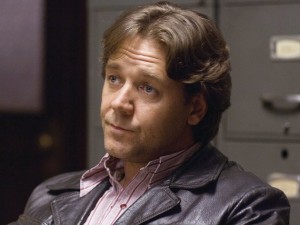
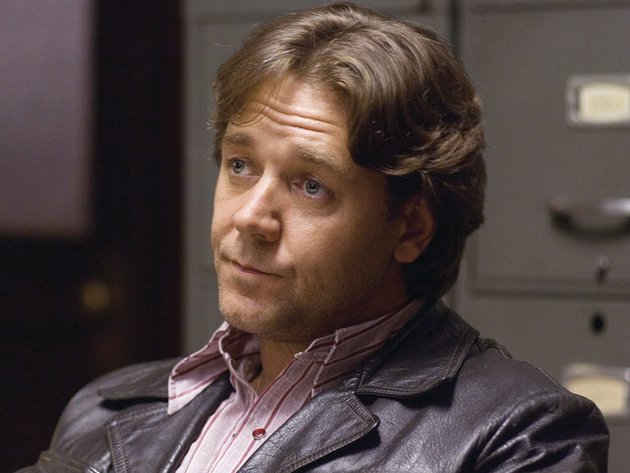
croweCrowe has a formidable intellect, a puritanical intensity toward his craft, and a probing spiritual curiosity. “Growing up, we always had this odd relationship with the church,” he confessed to actor Paul Giamatti a few years ago in Interview magazine. “Though we didn’t really go as a family, my mother was totally fine with the idea of me going to church on my own, so I’d go and have a look at a Catholic service or a Presbyterian service or an Anglican service. I went to a temple. The Bahá’i faith is something I looked at as well. Although I wasn’t brought up in a religious household, I’m a very inquisitive person about it, and, just the same as with my acting, I’ve taken things from various sources that mean something to me.”

Crowe went on to say, “Finding a way of discussing what’s going on inside you is healthy, as is finding a way to forgive yourself for stupid [stuff] you do—and a way to acknowledge that you’ve done something stupid. If religion means anything to me, it’s about that.”

Last December, Crowe surprised observers with comments he made in Men’s Journal about a chapel he had built on his 1,400-acre Australian ranch north of Sydney. In an occasionally testy and contentious exchange with interviewer Allison Glock, Crowe was asked, “What is the most extravagant thing you’ve bought for yourself?”

Crowe responded, “Building the chapel on the farm where we got married.”

He was referring to a magnificent $400,000 dome sanctuary inspired by the kind of European skylines found in Paris and Rome. “I needed to convince Danielle [Spencer] we didn’t have to travel to Rome to get married like she’d always dreamed of, because I saw all the paperwork involved. So I had to manage that disappointment. I built her a Byzantine chapel of her own. It is consecrated and everything.”

Turns out that the dome was actually an addition to a small, rough-hewn chapel that Crowe had earlier built for personal reflection and contemplation. “In the long term,” Crowe said, “it isn’t really extravagant at all. Because we don’t have to travel to Rome to see where we got married. And we use it all the time.”

Crowe told Glock that, in addition to being the place where he married Danielle, the chapel was where his firstborn son Charlie was baptized—something Crowe never experienced at a young age. He then reported that when his second son Tennyson is baptized, “I will too.”

Glock was startled. “You plan to get baptized now, at 43?” she asked.

“I’d like to do it this year,” Crowe responded. “My mom and dad decided to let my brother and me make our own decisions about God when we got to the right age. I started thinking recently, If I believe it is important to baptize my kids, why not me?”

During the ritual of baptism, those participating are told that it is an “ outward and visible sign of an inward and spiritual grace,” which sounds remarkably similar to the kind of thing Crowe longs to signify.

“I do believe there are more important things than what is in the mind of a man,” Crowe said. “There is something much bigger that drives us all. I’m willing to take that leap of faith.”

Somehow you get the feeling that this was the kind of thing that was racing through Charlton Heston’s mind and soul when he stood barefooted on the set of The Ten Commandments—looking to the heavens for contentment and happiness in the midst of his commission.

Steve Beard is the creator and editor of Thunderstruck Media. 
Posted in Uncategorized | Leave a comment

Aaron Neville’s road to redemption

By Steve Beard

2007 Risen

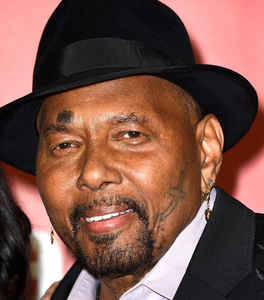
There are two striking features you notice when Aaron Neville performs: his massive biceps and his ethereal falsetto voice. Once you come to grips with the incon­gruity of his hulking, muscular frame and his transcendent vocal gift, you take notice of the rosary bracelets, the dis­tinctive mole above his left eye, and the numerous tattoos- including the dagger on his left cheek.

A few years ago, my best friend and I were invited to the CD release party for the Neville Brothers while we were in New Orleans. The Neville family has been a Big Easy music institution for more than 50 years. The brothers (Art, Aaron, Charles, and Cyril) were in their hometown pro­moting Walkin’ in the Shadow of Life-a hip-hopish album of French Quarter funk, jazz, soul, rhythm and blues.

The crowd at the House of Blues was mesmerized as Aaron sang his classic ballad, “Tell It Like It Is.” Forty years ago, that song shot to the top of the charts. The heartbreak behind the hit is that although it had been selling 40,000 copies a week and was being played nationwide on the radio, Aaron Neville’s recording label was in a downward tailspin. He never saw the song’s royalties. Someone was get­ting rich off his artistry, but it sure was not Neville. While the song was topping the charts, he was busting his back as a longshoreman on the docks of New Orleans in order to feed his family. Continue reading

Posted in Uncategorized | Tagged , | Leave a comment

The tenacity of William Wilberforce

By Steve Beard

If you’ve seen the movie Crash, there is a scene in which Anthony, a car thief, discovers a van with the keys dangling in the driver’s door. Since no one is around, he hops in and drives to a chop shop to sell off the parts. When they open up the back of the van, Anthony and the shop owner are startled to find a dozen Asian men, women, and children. In stunning immediacy, the shop owner offers Anthony $500 for each one without a tinge of reluctance—haggling for humans like used auto parts.

As the 2006 Academy Award-winning morality tale, Crash is loaded with gut-wrenching scenes meant to prick our racial prejudices and stereotypes. The chop shop scene came to mind while viewing Amazing Grace, a film about British abolitionist William Wilberforce (1759-1833). Available now on DVD, the movie’s release was timed to celebrate the 200th anniversary of the abolition of slavery in England. At that time, the British Empire was heavily dependent upon the slave trade and Wilberforce dedicated his entire life to fighting the gross social injustice. Continue reading

Posted in Uncategorized | Tagged , , | Leave a comment