The Vulnerable God

By Kenneth Tanner

And the Word became flesh and dwelt among us, and we have seen his glory, glory as of the only Son from the Father, full of grace and truth.
—John 1:14 ESV

Therefore he had to be made like his brothers in every respect, so that he might become a merciful and faithful high priest in the service of God, to make propitiation for the sins of the people.
—Hebrews 2:17 ESV

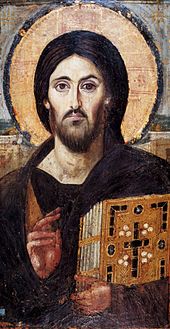
On a wall in the chapel of the Saint Catherine’s Monastery, a remote wilderness abbey at the base of Mount Sinai in Egypt, hangs an icon.

It’s not a poster of Brad Pitt or a reproduction of the Apple or Microsoft logo. This is a religious icon, perhaps the oldest in the world — a special painting the first Christians called a window into heaven.

This figure of Christ Pantocrator, or Christ the Ruler of All, is no ordinary icon. No surviving icon of its era looks anything like it. It seems fresh, as if painted yesterday.

Believed to have been given to the desert monastery in the mid-​sixth century by the Byzantine emperor Justinian, it survived a period when icons were destroyed in many urban churches, was preserved against deterioration in the arid climate, and was secured from invaders by an order of protection the prophet Muhammad himself granted after the monks of Saint Catherine’s gave him shelter and hospitality.

The icon shares sixty-three points of precise alignment with the image of Jesus “burned” into the Shroud of Turin, five times the number of alignments needed to match fingerprints.

For many, this is the closest thing we have to a photograph of God.

Note the difference between the left side of the face (in which some see evidence of Christ’s torture and passion) and the right side (in which some discern his transfigured, resurrected radiance).

The icon tells the story of Good Friday and Easter.

The eyes stand out. Something about them is not quite right. For some, they have an unsettling quality. One of my childhood friends had a lazy eye. He was wonderfully unconscious of his difference, but I often was distracted by it. More frequently than I’d like to admit, I caught myself staring.

The more time I spent in prayer looking at this unique image of Jesus — the Pantocrator — the more the asymmetry of the eyes troubled me. I pondered why the artist would paint Jesus with a physical “imperfection.”
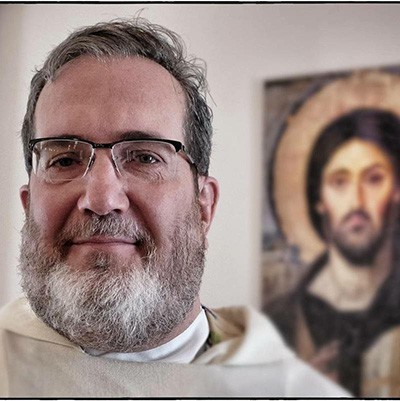
The Rev. Kenneth Tanner

Eventually I realized this was not a problem with the artist or the image but rather a limitation of my imagination, a failure to see everything there is to see in Christ. After all, the word became flesh in Jesus (John 1:4) and was made like us in every respect (Hebrews 2:17).

Jesus took on everything it means to be human. One early Christian pastor taught that “what has not been assumed has not been redeemed.” Jesus grew tired, donned a cloak against the piercing cold and burning sun, could catch a virus or suffer a wasting disease, and if all that is true, he might also have borne some physical “defects.” Isaiah’s prophecy of the suffering servant warned us that Jesus had “nothing beautiful or majestic about his appearance, nothing to attract us to him” (53:2b NLT).

Still, I discovered it wasn’t just a matter of accepting that Jesus might have had physical imperfections. I had never absorbed into my heart the reality that the divine became one with matter in Jesus. Real flesh, real bones, real heart.

My encounter with the Sinai Pantocrator helped end my inherited mental image of Jesus as a stick figure in a Bible story — a Sunday school flannelgraph character — and experience the full-​blooded actuality of how things are in Jesus Christ; even the possibility that the sinless one’s participation in our nature involved bearing physical infirmities, just as daily he grew thirsty, hungry, and weary.

Icons of Christ help us consider that Jesus is no abstraction — no mere thought, no matter how beautiful; no protagonist in a children’s story told to make us feel better — but the express image of the unseen all-​holy God made vulnerable (Colossians 1:15), made like us “in every way.”

We see in Jesus the sacred reality of our humanity as God intended it from the beginning; his was the first human life to fulfill that intention. The Sinai icon helps us comprehend that we become most truly human when we embrace the humanity of God in Jesus Christ.

Embracing the humanity of God, icons help us visualize such an incredible possibility; that we might, by grace, become transfigured partakers of the divine nature in clay (2 Peter 1:4).

I have a sort of odd pastoral practice. I keep small wood-​mounted reproductions of this Sinai icon in my backpack to give to strangers and friends. I started this about ten years ago on Chicago’s trains, subways, and buses. My commute was four hours round trip. Eventually folks figured out I was an undercover man of the cloth, commuting and working just as they did every day — someone imperfect enough that they eventually came to share with me their questions about God.

The icon gave me a way to show them the gospel and allowed me to use fewer words when I did so. Fifteen hundred years after its creation, the icon still hangs in the shadows of the mountain on which God forbade the worship of idols.

The reason this isn’t ironic is that icons are not idols. Idols are objects that we make and worship in place of the living God. In Jesus Christ, God has acted to make a perfect image of himself (Hebrews 1:3).

God has made Jesus the “visible image of the invisible God.” When iconographers depict Christ in the icons they write — in their parlance, icons are “written,” not painted — the writers are not fashioning a god for themselves but rendering an image of what the Father, Son, and Spirit have already done in the incarnation of the one God in Jesus Christ.

It is not idolatry that God became flesh in Jesus, and it is not idolatry to depict what God has done and hang these depictions in our homes and houses of worship just like we hang family photos or images of contemporary leaders. We would never think to tear such images up or deface them, because these pictures represent the people we love. Almost no one worships these depictions. Christians do, however, worship a God who clothed himself in clay, in the same material stuff with which he made our ancestors in his image in the Garden of Eden.

Women and men are made in the image of God, female and male together bearing all that is in God, and so it shouldn’t surprise us when our incarnate Lord looks like us. The Sinai icon reminds us that we are one with him and he is one with us.

Ponder with me for a moment the mystery that we’ve entered when we encounter Christ in the Gospels . . .

When Jesus is on the Sea of Galilee with the disciples, and storm winds and waves frighten even seasoned fishermen, we find the God who made the waves, the wind, and the wood the boat is crafted from — who made everything and holds everything together — tired and asleep in the hold of the ship.

God is asleep on a boat, even though our first thought as readers is that, of course, Jesus, a mere human, is napping (and that is true, too).

When the disciples awaken Jesus and he surveys the situation (and their hearts), he rebukes their fear, and then a mere man stands up on two feet in a vessel sloshing with lake water and speaks: “Peace, be still.”

Someone just like the rest of the disciples — with breathing lungs and a beating heart, sleepy and finding his sea legs — makes the wind stop gusting and turns the waves to glass with his words. As readers, we think Jesus is God and this awe-​inspiring ability fits his divinity, but Jesus is also merely human, no more special in his biochemistry than anyone else in that boat on a sea gone wild.

When we read every story about Jesus with the sort of contemplation that icons allow — realizing this protagonist is in every moment God “all‑in” and human “all‑in” — we begin to discern that something has happened forever in God and something has happened forever in us, because the Son who breathed the stars into fiery existence and set their courses in the sky, who made the orchid and the hummingbird, humbled himself and was made like us in every way: weary, thirsty, hungry, aching, longing, striving, rejected, fallen, marvelous clay that we are, that we might be as he is, as God from all eternity. World without end.

The Sinai icon reminds us that in Jesus Christ, God leaves fingerprints, leaves DNA , wherever he goes (Jesus is human without measure); that Jesus breathes the spirit of the Father’s loving-​kindness on all things (Jesus is divine without qualification).

His blood, his touch, his stops of breath reconcile the creator and the clay that as female and male alone in all creation bears the image of God.

Jesus walks with us, walks as us now, and we participate by our prayers, by our touch, by our faith and compassion — sometimes even by our blood — in the renewal of all things.

We see the likeness of Jesus in every human. Would that they might behold in our faces the icon of his vulnerability, self-​sacrificial love, and resurrection in this wild, wonderful world he became human to restore to life without end.


Kenneth Tanner is pastor of Church of the Holy Redeemer in Rochester Hills, Michigan. His writing has appeared in Books & Culture, The Huffington Post, Sojourners, National Review, and Christianity Today. This essay originally appeared in Disquiet Time: Rants and Reflections on the Good Book by the Skeptical, the Faithful, and a Few Scoundrels (Jericho Books). It is reprinted by permission.
Posted in Uncategorized | Leave a comment

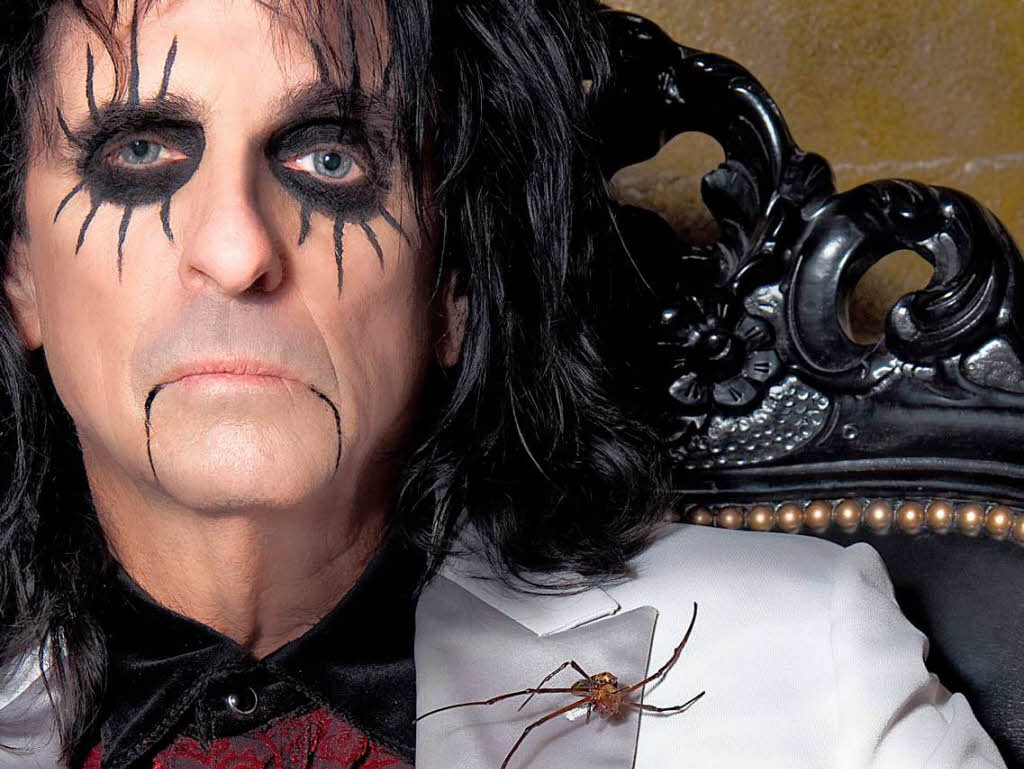
The way of faith for Alice Cooper

By Steve Beard

Back in 2002, MTV announced that the biggest hit in its history was a program called “The Osbournes.” The half-hour show — complete with constant bleeping from excessive foul language — was a curiously fascinating docu-comedy starring the members of Ozzy Osbourne’s family — wife and two teenage siblings (the eldest child bowed out of the show). Ozzy, of course, is the British rock singer acclaimed for his ghoulish heavy metal performances.

CooperThe Osbournes had just moved into a new Beverly Hills mansion where they promptly bemoaned the loss of their former neighbor, Pat Boone. Ozzy dottered and mumbled around the house trying to figure out the TV remote control, his wife hired a pet therapist to get the dogs to stop pottying in the living room, and the kids screamed and chased one another around the Osbourne compound.

Truth be told, I found the show captivating in a strange way. Others, justifiably, hated it. The television networks were scrambling to tap into the newly minted genre of “reality” television. At that time, I recommended that the next MTV show should feature Alice Cooper’s family. That’s right, the spooky granddaddy of shock rock who festooned his stage with guillotines, electric chairs, and boa constrictors. Continue reading

Posted in Uncategorized | Leave a comment

Wrestling disquietly with the Bible

By Steve Beard

“My new Bible study is really testing me. I have never studied the Bible or read my Bible and I really have no idea how to do it,” confessed my friend Tiffany on Facebook. “The language is still confusing and I feel like I’m not really getting the messages.”

grantfalsani_disquiettime_hc-2-1The 24-year-old roller derby girl, saleswoman, and mother recently began attending a new church with her husband and she joined a women’s Bible study. “No matter how you word it, the Bible still has very confusing parts. I promise you it is not the version I’m using that is the problem. It is that I am just new with this whole studying the Bible thing. I feel like a freshman that just finished basic math and got thrown into senior calculus.”

As you can imagine, there was no shortage of responses to her post. Tiffany’s Facebook confession was made on the same day I received Disquiet Time: Rants and Reflections on the Good Book by the Skeptical, the Faithful, and a Few Scoundrels, edited by Jennifer Grant and Cathleen Falsani (Jericho Books). In their introduction, the two editors describe the contributors as “nonconformists and oddballs,” comparing them to the characters on the Island of Misfit Toys from Rudolph the Red-Nosed Reindeer. Do you remember the cowboy who rides the ostrich or the toy train thunking along the track with a square wheel on its caboose? The imagery is strangely fitting for this collection of ruminations on the Bible from a wide variety of faith traditions.

Continue reading

Posted in Uncategorized | 2 Comments

Patti Smith’s spiritual journey

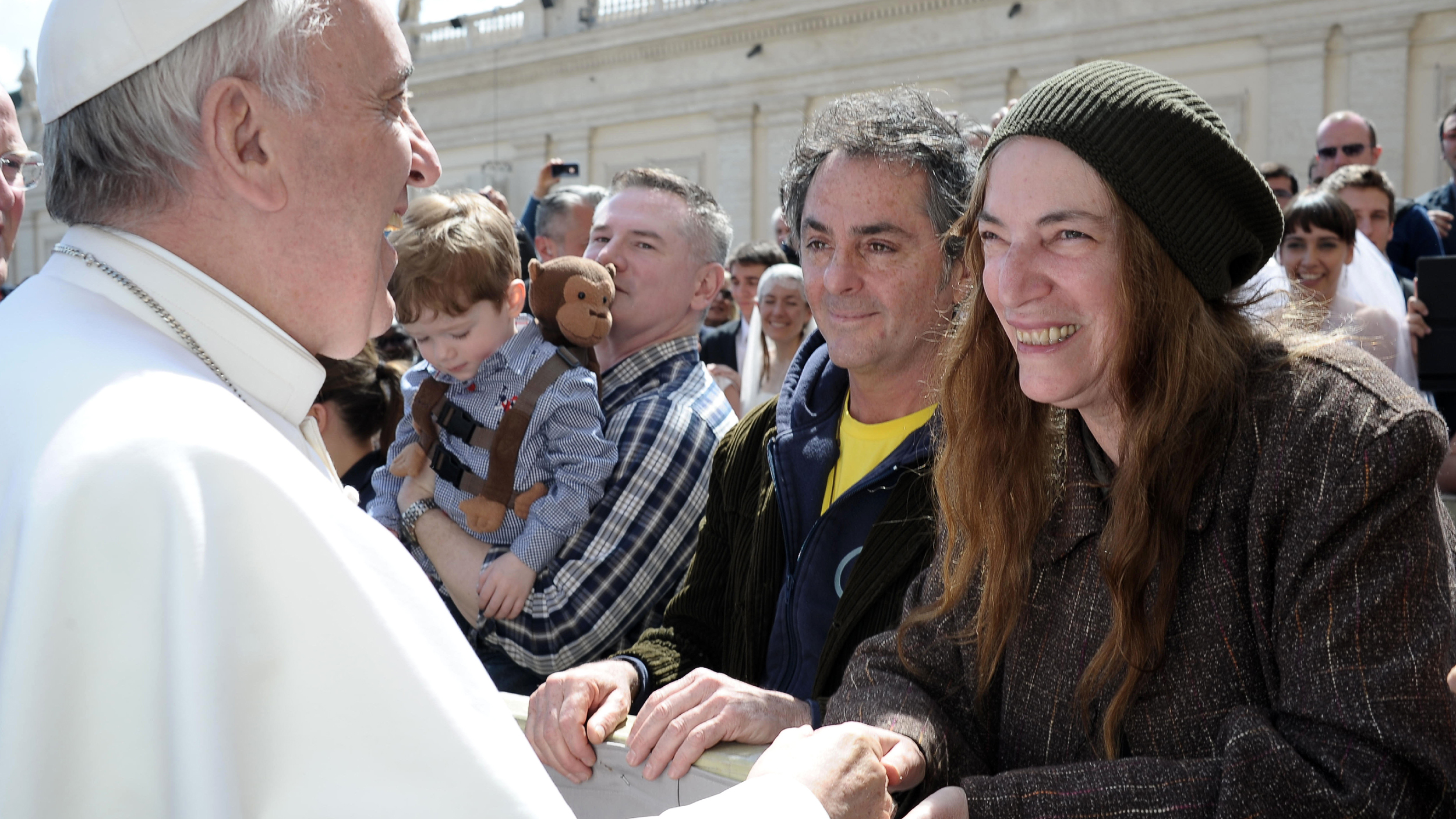
Legendary punk poet Patti Smith, right, is greeted by Pope Francis at the end of his weekly general audience, in St. Peter’s Square at the Vatican, Wednesday, April 10, 2013. (L’Osservatore Romano). Speaking to The Guardian, Smith has said: “I like Pope Francis and I’m happy to sing for him. Anyone who would confine me to a line from 20 years ago is a fool!” She continued: “I had a strong religious upbringing, and the first word on my first LP is Jesus. I did a lot of thinking. I’m not against Jesus, but I was 20 and I wanted to make my own mistakes and I didn’t want anyone dying for me. I stand behind that 20-year-old girl, but I have evolved. I’ll sing to my enemy! I don’t like being pinned down and I’ll do what the f**k I want, especially at my age.”

If you have ever been curious about the complicated spiritual journey of iconic punk poet Patti Smith, Ray Padgett’s essay on her version of “Gloria” is exceedingly helpful. This was posted HERE back in 2014. What follows is a shorter excerpt of his article.

Before there was a song called “Gloria,” there was a poem called “Oath.” And the transition from one to the other might never have happened without forty bucks and one loud bass note.

Smith wrote “Oath” in 1970, opening with a line that wouldn’t become famous for five more years: “Christ died for somebody sins but not mine.” A giant kiss-off to her Jehovah’s Witness upbringing, the poem rattled off lines like “Christ, I’m giving you the goodbye, firing you tonight” and “Adam placed no hex on me.” The hostility towards religion that shocked so many in “Gloria” pales in comparison to the text of the original poem.

She performed “Oath” at her very first poetry reading, at St. Marks Church’s prestigious Poetry Project series in February 1971. She opened for Andy Warhol protégé Gerard Malanga in front of an audience that included Allen Ginsberg, Jim Carroll, Sam Shepard, and many other luminaries of the cutting-edge downtown poetry scene. …

Though she kept performing “Oath” in both solo and duo incarnations for the next few years, she must have sensed it was missing something. When she released her first book of poems, 1972’s Seventh Heaven, she left “Oath” out. Her second book the following year Witt didn’t include it either. One would never know “Oath” existed unless they came to see a reading in person – and even then they might miss it, since it usually took all of sixty seconds. Continue reading

Posted in Uncategorized | Leave a comment

East of Eden

2000__largeBy Steve Beard

Every morning I see a poster hanging in my home for a Triple Crown surf contest in Hawaii. During the last 25 years, I have been to several of the islands, but the small town of Haleiwa on the North Shore of Oahu has been my vision of paradise. We all envision paradise differently: The Mall of America, Fenway Park, Disneyland, Pike’s Peak, the Amazon rainforest. Mine just happens to include shave ice, pineapples, macadamia nuts, and crashing surf.

Several months ago, my family gathered in Maui to celebrate my mom and dad’s 50th wedding anniversary. Before renewing their vows in a beautiful United Methodist sanctuary, I was invited to preach the sermon at the morning service before a congregation of Tongans, tourists, and my extended family.

Because of all the sights, sounds, and smells that surrounded us, I took the opportunity to ask if it was easier or more difficult to find God in paradise. I take great comfort in knowing that the human story told in the Bible begins and ends in the gardens of paradise. The environment surrounding the Tree of Life bookends both Genesis (2:8-9) and The Book of Revelation (2:7).

I love knowing that God cared about creating “trees that were pleasing to the eye” in Eden and that it was his first choice, his first plan, and his heart’s desire. Our search for paradise is God-crafted. There are more than two dozen cities in the United States called Paradise. Why? Because the everlasting soul craves an eternal kingdom.

Continue reading

Posted in Uncategorized | Leave a comment

Eternity on the Sidewalk

By Steve Beard

When we are born we bear the seeds of blight;
Around us life & death are torn apart;
Yet a great ring of pure and endless light;
Dazzles the darkness in my heart.

staceSometimes poets drive me nuts. Despite my best efforts, poetry is not my first language. Nevertheless, my heart melts when the poetic swerve makes a complex matter sound wistfully sensible. The stanza above is from the late Madeleine L’Engle, the poet and storyteller behind A Wrinkle in Time, and it helps even a left-brainer like me to conceptualize the theological complexities of the human heart and our journey.

As I grow older, the more I love the image of eternity as a great ring of endless light. Perhaps it is because I am acquainted too well with the darkness and pettiness in my heart. L’Engle’s words conjure up the imagery of someone shouting “Hello!” into a dark cavern where the words are given the freedom to echo on and on.

Everlasting to everlasting is a mighty long time. That is a terrifying prospect to some, and sweet relief to others. Somehow foreverness seems to be etched into our DNA. “There is a God-shaped vacuum in the heart of every person, and it can never be filled by any created thing,” mathematician and physicist Blaise Pascal observed almost 350 years ago. Is that what gives such lasting import to words such as Hope, Mercy, Grace, Love, and Resurrection?

Continue reading

Posted in Uncategorized | 1 Comment

Fatherly advice

My son John Paul just turned 18 years old. I fired off my first letter to him when he was four days old. “All of this is to simply say that you were wanted and we are so glad that you have arrived,” I concluded back in 1996. When he turned 13, family friends wrote him encouraging notes of advice as he experienced a non-kosher version of a Protestant bar mitzvah. “I don’t suppose that anything magical happened when you woke up and had officially turned 13,” I wrote. “Nevertheless, this is an important time for me to tell you again how much I love you and how unbelievably proud I am of you.” As he packs up for college, this is some of the letter I wrote to him (shared here with his permission).

–Steve Beard

Dear John Paul:

Rolling Stone recently published a fascinating profile of Annie Clark (who performs her rock ‘n’ roll under the stage name of St. Vincent). When she was young, Clark’s grandmother baptized her in a kitchen sink “with a cigarette in one hand and a martini” in the other. Her parents were not particularly devout Christians, but the baptism meant a lot to the grandmother and her parents believed “it wouldn’t do any harm.”

Steve and John Paul Beard.

I laughed because of the similarities and dissimilarities between her experience and your baptism. Your mom and I wanted your grandfather to perform this ancient ritual because it is an outward and visible sign of the inward and invisible grace that brews within you. When your grandfather baptized you in the waves of Maui, those of us on the beach and the nearby sea turtles were witnesses to this sacred moment.

The difference between Annie Clark’s parents and your own mom and dad is that we actually believe that your baptism is significant, sacred, and spectacular. When times are tough, I hope you can remember your baptism. It directly links you to innumerable generations of believers before you from every culture and from every tongue around the globe.

This letter is not meant to be a trite rah-rah cheer for Jesus. You are now an adult. Your life is a runway before you. Take off. Fly. You can choose your own path, cut your own trail, and make your own decisions. Sometimes that will be sweet relief — at other times it will be exhaustingly miserable.

Continue reading

Posted in Uncategorized | Leave a comment

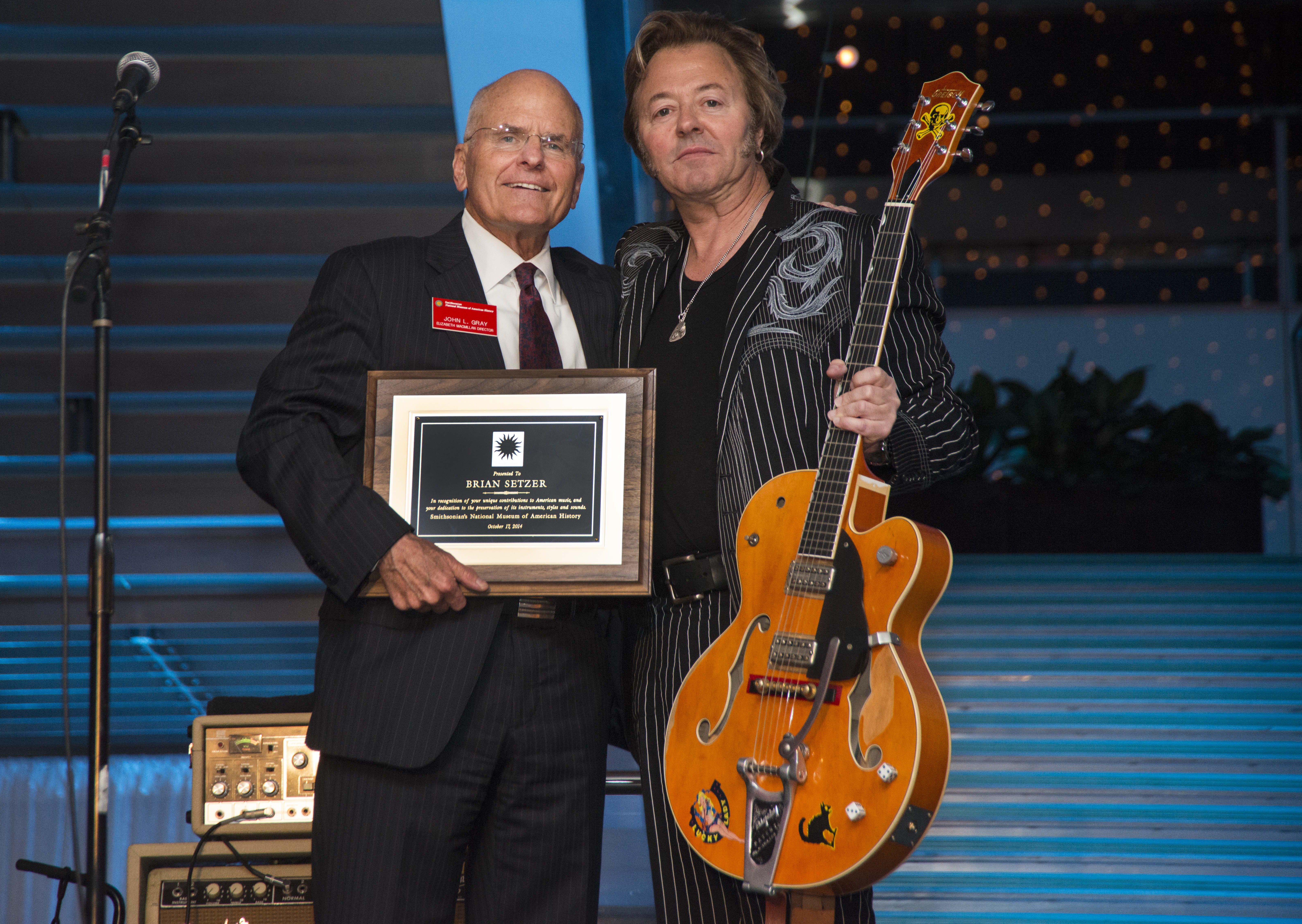
Setzer Gretsch in Smithsonian

Brian Setzer RWS2014-03259Brian Setzer’s gorgeous Gretsch guitar has now been inducted into the Smithsonian Museum of American History. Setzer’s guitar – which is actually a replica of his 1959 Gretsch – will be part of the stunning collection of musical instruments at the museum that includes John Coltrane’s saxophone, Dizzy Gillespie’s trumpet, Prince’s Yellow Cloud electric guitar, and Eddie Van Halen’s “Frank 2” guitar.

As a lifelong fan of the Stray Cats and the big band sounds of The Brian Setzer Orchestra, I could not be happier for the innovative Setzer. As a young rockabilly musician, I lusted after that classic Gretsch guitar – that garish orange body with those two dice that he drilled to replace missing tone knobs and the Lucky Lady, skull and crossbones, and Black Cat stickers. As to the replica guitar that will be at the Smithsonian, apparently his original guitar began to age and became unplayable. A master guitar builder replicated every detail of the original and created an exact replica in 2006 that Setzer has been playing. Congratulations, Brian Setzer! Rockabilly rules!

Posted in Uncategorized | Leave a comment

Happy Birthday Wanda Jackson!

By Steve Beard

At the age of 77, the righteous Queen of Rockabilly is still tearing it up with 60 to 80 concerts per year. Considered to be one of the first women to record rock and roll, Jackson is a sassy music legend who toured with Johnny Cash, Jerry Lee Lewis, Buddy Holly, and, most recently, Adele. It was her boyfriend, Elvis Presley, who convinced Jackson to migrate from country music to rockabilly.

Wanda Jackson

In the 1960s and 1970s, Jackson growled out hits such as “My Big Iron Skillet,” “Tears Will Be the Chaser for your Wine,” and “Fujiyama Mama.” Ten years after their marriage, Wanda and her husband Wendall began attending church and dedicated their lives to Christianity in 1971. “We were headed down a pretty rocky road,” she told Smithsonian Magazine. “The main thing that God does for you when you really sell out to him and want to live for him is he sets your priorities up right.” Over the next decade, she recorded half a dozen gospel albums and devoted their talents to churches and revival meetings.

When the rockabilly revival of the 1980s was launched, Jackson was recruited to tour all over Europe. With her legendary status as a rock pioneer, she was periodically invited to play at music festivals and to collaborate with other artists such as Rosie Flores and The Cramps.

Continue reading

Posted in Uncategorized | Leave a comment

Lecrae, Imelda May, Southern Food Museum, Tiki Bars, and Sunday Mornings

lecrae

• Lecrae: ‘Christians Have Prostituted Art to Give Answers.’ Thoughts on rap and God from the 34-year-old musician, who was the first to ever simultaneously land an album at the top of the gospel music charts and the Billboard 200 (The Atlantic)
Digging: Record shopping with Imelda May (The New Yorker)
• A New Museum To Celebrate Southern Food (And You Can Eat The Exhibits) (NPR)
• Reviving the Tiki Tradition: The 14 Best Tiki Bars on O‘ahu (Honolulu)
• Confessions of a Pastor’s Wife: I hate Sundays by Kirsten Oliphant


Posted in Uncategorized | Leave a comment